Aloft · April 22, 2026
Aerial Abstracts: Reading the Earth as a Painting from Cruising Altitude
From 35,000 feet the ground stops being scenery and becomes composition - braided rivers, irrigation circles, salt flats, mountain shadow. Learning to read the land below is half the photograph.
 By June “Goose” Aldaco · 6 min read
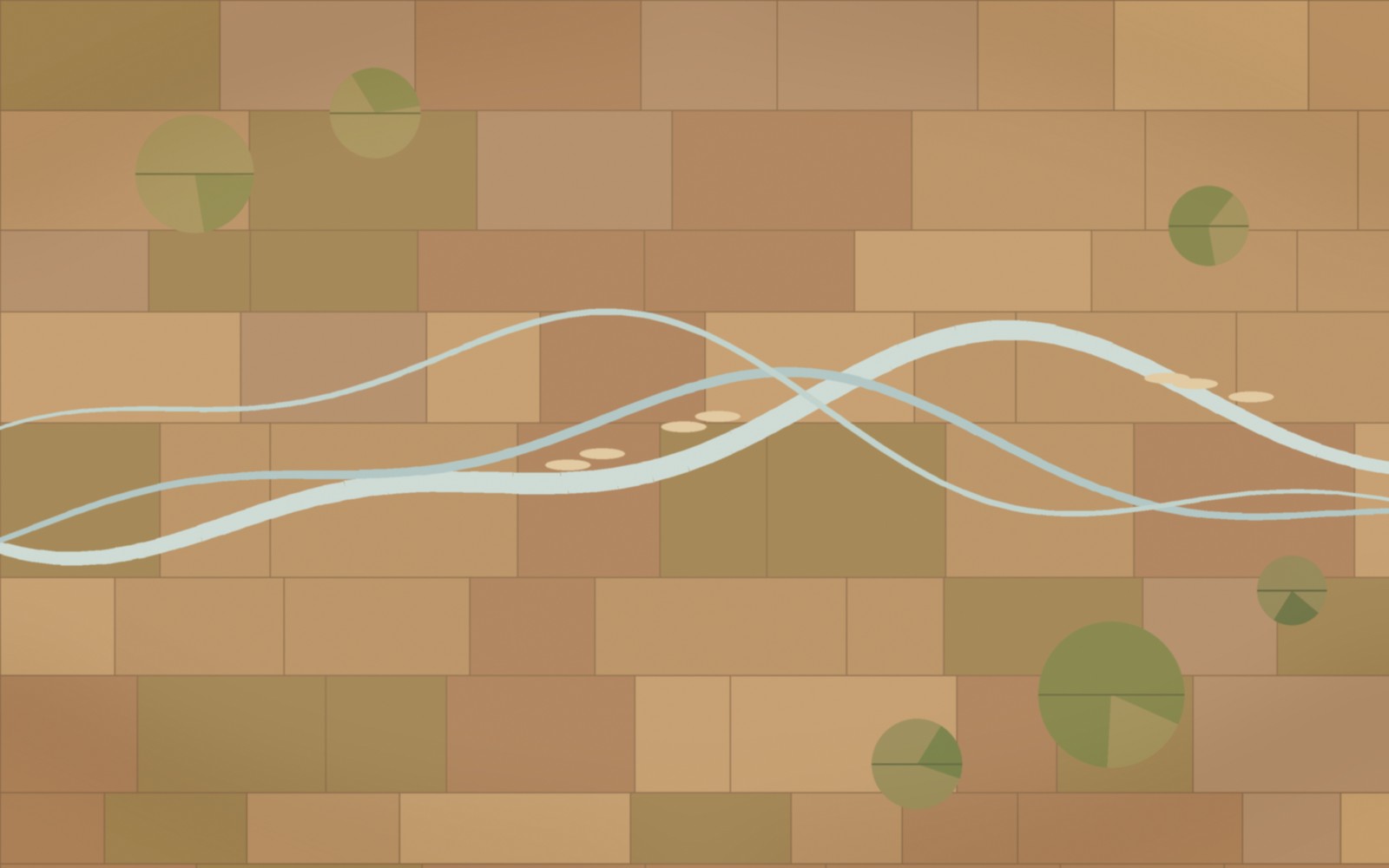
Somewhere over eastern Colorado, years ago, I looked down and realized the wheat fields had become a canvas - perfect green circles overlapping tan squares, a composition no painter would dare for being too tidy. I made the frame, and when I got home I cropped out the wingtip and the horizon, and what remained was not a landscape at all. It was geometry with a history. That is the whole practice of aerial abstraction: the earth from cruising altitude stops being scenery and becomes form, and your job shifts from recording a place to composing with it.
Learning to read the ground
The photographers who do well at the window are the ones who know what they are looking at, because knowing lets you anticipate. Before a flight over unfamiliar country, I spend ten minutes with a map of the route - not to navigate, but to load my memory with what is coming: which rivers I will cross and roughly when, where the mountains end and the basin-and-range begins, whether the flight passes dunes or deltas or the long grid of the plains. Call it route-map mentality. It converts the window from a slideshow of surprises into a series of appointments.
The reading continues in flight. Farmland tells you about water: circles mean center-pivot irrigation drawing from wells, and the circles sit inside the square-mile survey grid that was drawn across the American interior in the nineteenth century, so the land does arithmetic for you - circle in square, repeated to the horizon. Braided rivers mean heavy sediment and shifting channels, silver threads splitting and rejoining across their own floodplain. Pale scars in dry country are usually salt: old lakebeds, playas, evaporation working in rings. Each of these is a fact about geology or agriculture, and each is also a motif.
Altitude is a lens
The phase of flight sets your visual vocabulary, and it is worth planning around. During climb and descent - roughly the portions below 20,000 feet - the ground has detail: individual trees, wakes of boats, the shadow of the airplane itself sliding over rooftops. This is the regime for scenes, for recognizable places, for anything that depends on texture. It is also brief, twenty minutes or so at each end, so I board with the camera set and the window already chosen.
Cruise, up around 35,000 feet, trades detail for pattern. Rivers become lines, field systems become weave, whole mountain ranges become texture you could rub with a thumb. The haze that ruins conventional landscapes up there matters far less to abstraction, because abstraction runs on shape and tone rather than on clarity. Some of my best cruise frames were made through air I would have called hopeless if I had been trying to photograph a mountain as a mountain.
The finest hour of all is sunrise or sunset at altitude over rough country. Low light rakes across ridgelines and every range casts a shadow miles long, blue-gray on the warm land beside it. Flying east out of Albuquerque early, I have watched the Sandias lay their shadow across the whole valley like a second, darker mountain range - there and gone in four minutes.
Exposing for white
Dry-country flying eventually puts something blinding under the wing: snowpack, salt flats, the gypsum dunes south of home that read from altitude like a spill of milk on the brown desert. All of them will fool your meter the same way. The camera assumes the world averages to a middle gray, so it sees a white landscape and darkens it to gray mush.
The correction is old and reliable: add exposure, deliberately. One stop over the meter's suggestion is my starting point for snow and salt, sometimes closer to two for sunlit gypsum, and I check the highlight warning to make sure the whites are bright but not clipped. Shooting raw buys forgiveness in both directions. The goal is white that still holds detail - the wind ripples in a dune field, the polygonal cracking of a salt crust - because texture inside the white is usually the entire photograph.
Composing without a horizon
The hardest habit to break at the window is including the horizon, because on the ground the horizon is what makes a landscape a landscape. Abstraction asks you to let it go. Tilt the camera down, fill the frame edge to edge with pattern, and exclude every clue to scale - no wing, no cloud, no sky. Once the eye cannot tell whether it is looking at a river delta or the veins of a leaf, the photograph starts working on different terms.
Then compose the way you would with any flat design. Find the strongest line and run it corner to corner. Let repeated forms - the pivot circles, the braid channels - set a rhythm, and look for the one interruption that breaks it, because the break is where the eye lands. Odd numbers beat even. Edges matter more than centers; walk the frame's perimeter in the viewfinder and evict anything half-included. And work fast: at cruise speed the composition beneath you is rearranging itself constantly, and the arrangement you saw is gone in under a minute.
The window log
Last habit, and the one that compounds: keep a log. A few lines per flight in a notebook or a phone note - route, date, time of day, which side I sat, and what passed below and when. Salt flats forty minutes after departure, westbound, left side. Braided channels crossing beneath the descent into the northern valley. It sounds fussy. It is the same discipline as my goose notebook from the refuge, five autumns of arrival times and light angles, and it pays the same way: the next time I fly that corridor, I am not hoping for the picture, I am waiting for it, camera up, two minutes early.
That is what abstraction from an airliner finally teaches - the earth repeats itself, beautifully, on schedule. The rivers braid the way they braided last year; the circles turn green in June. You are not lucky at the window. You are either prepared or you are asleep, and the glass does not care which. I try to be the one who is awake.
Source notes
Facts in this essay were checked against the following public resources (search the titles to find them):
- NASA Earth Observatory
- National Park Service, "White Sands National Park"
- U.S. Geological Survey