Afield · May 27, 2026
The One-Bag Camera Kit: A Week of Photographs from One Small Bag
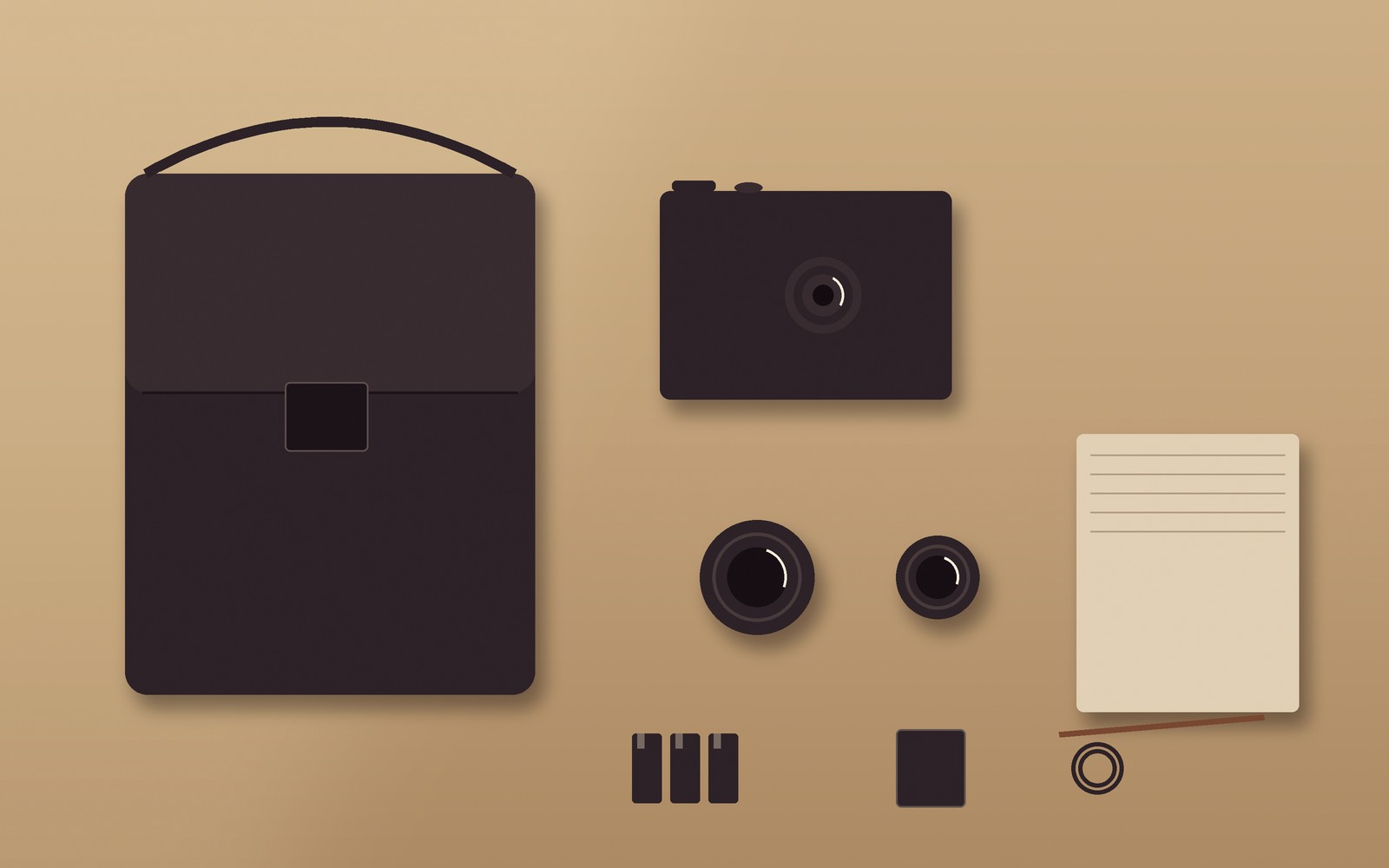
After years of packing for imaginary photographs, I now travel for a week out of one small bag: a body, two lenses, and a charging kit that fits in a fist. The constraint is not a sacrifice - it is the method.
 By June “Goose” Aldaco · 6 min read
I once carried four lenses through three countries and used two of them. The other two rode along like anxious passengers, adding three pounds to every mile I walked and contributing exactly nothing except the feeling of being prepared. Somewhere on a long staircase in a hill town, doing the math on my shoulders, I decided that feeling was too expensive. I have traveled with one small bag ever since, and my pictures got better the same season my back did. I no longer think that is a coincidence.
Two lenses, chosen for the trip
The discipline is simple: one small camera body, two lenses, and the honesty to choose them for the actual trip instead of the imaginary one. Every trip has a shape, and the shape tells you the focal lengths.
For a city week, I carry a fast 35 and a short telephoto around 85. The 35 lives on the camera and does streets, interiors, food, people at conversation distance. The 85 comes out for portraits, compressed alleys, details across a canal. Between them there is a gap, and the gap is fine - you walk to fill it.
For a landscape trip, the pairing shifts wide: something around 20 and a mid-range zoom. The wide lens does the big country and the tight tent shots; the zoom does everything the wide cannot reach, which in open terrain is most things. Landscape is the one genre where I forgive myself a zoom, because the subject will not walk closer.
Wildlife is the exception that tests the rule. If the trip is genuinely about animals, the long lens is the trip, and it earns the whole weight budget by itself - one long lens, one body, and a phone camera for everything else. That is still a one-bag kit. It is just a bag with one big idea in it.
What never changes is the count. Two lenses means every scene gets one of two answers, and you stop auditioning glass in the field. The decision you would have made at the bag, you now make with your feet, earlier, while the light is still doing what you liked.
The weight math
Here is the arithmetic that converted me. A walking day in a new city runs eight to ten miles. Every extra pound in the bag is a pound lifted through every one of those miles, and by late afternoon - which is to say, by the good light - a heavy bag has already made your decision for you. You will shoot what is near the café. The lightest kit is not about comfort; it is about still being ambitious at 6 p.m.
So I weigh things. Not obsessively - I just put the packed bag on a scale before every trip and ask one question: is anything in here that I would not climb a bell tower with? Whatever fails the question stays home. My working ceiling is a bag I can forget I am wearing, which for me lands well under ten pounds with everything, water included.
Charging, consolidated
Chargers breed in bags. My rule is one wall plug, capable of charging two devices, and short cables - the camera charges over the same cable as the phone, the spare batteries top up in-camera overnight or in a single travel charger the size of a soap bar. A small power bank rides in the day bag and rescues whichever device blinks first. That is the whole electrical department: it fits in one fist, and I have never once missed the octopus of adapters I used to pack.
Two spare batteries, always. One is a plan; two is a system. I rotate them so no battery sits full for a week, and cold mornings get a battery warmed in an inside pocket.
Weather protection that weighs nothing
The best rain cover I own cost nothing and came from a grocery store: a clear produce bag and a rubber band. Bag over the camera, lens hood poking through the open end, rubber band snugging the plastic to the hood. You can see the controls through the plastic, work them through it, and replace the whole apparatus in any market on earth. It packs to the volume of a cough drop. I carry two, plus a cotton bandana for wiping the front element and my own face, in that order of priority.
That, and patience about condensation: coming from cold streets into a warm room, the camera stays zipped in the bag for half an hour so the fog forms on the bag, not in the lens.
Do I bring the tripod?
Usually, no - and here is the actual decision tree. Am I planning specific frames that require seconds-long exposures: star fields, silky water, true night landscapes? Then yes, a small tripod earns its seat. Anything short of that - blue hour, interiors, dawn - modern stabilization plus technique covers it, and a beanbag covers the rest. Mine is a small drawstring pouch I fill with rice or dried beans from a local shop on arrival and empty before the flight home. Set it on a wall, a railing, a car roof; nestle the camera; use the self-timer. It holds a composition as steadily as three carbon legs and it never announces you the way a tripod does. Half the time, the wall alone is enough.
Cards and the nightly ritual
Storage is the one place I refuse to be minimal. Cards are the negatives. On the road my routine is fixed: every night, copy the day's cards to a pocket drive, verify the copy actually opens, and only then keep shooting on the same card the next day. Nothing gets formatted until the trip is home and backed up twice. Cards ride in a case in the bag; the drive rides in a different bag, or my jacket, so no single theft takes both. It costs ten minutes a night and it has saved a trip exactly once, which is the only justification it needs.
What stays home, and why it works
The drone stays home. The flash stays home. The third lens, the backup body, the filters I have used twice - home, all of it. What I have learned is that the bag was never really carrying gear; it was carrying indecision. Two lenses force a point of view, and a point of view is the thing photographs are made of. When every scene has only two possible framings, you commit earlier, you move more, and you look longer - because looking is the one piece of equipment that weighs nothing at all.
Source notes
Facts in this essay were checked against the following public resources (search the titles to find them):
- Transportation Security Administration, "What Can I Bring?"
- National Park Service, "Photography"